
Standard vs. Heavy-Duty: Analysis from a Top 10 7 Way Round Trailer Connectors Manufacturer on Durability


(YorkPedia Editorial):- Hangzhou, Zhejiang Jul 10, 2026 (Issuewire.com) – The reliability of a commercial vehicle often rests on the smallest interface within the entire electrical system: the trailer connector. In the high-stakes world of heavy-duty logistics, a single localized failure in signal transmission can lead to massive operational downtime or safety risks. While many fleet operators view connectors as simple commodities, significant engineering deltas exist between standard consumer-grade plugs and professional industrial solutions. To address these demands, TOKING has focused on refining the structural and electrical resilience of vehicular interfaces. The company has secured its position as a Top 10 7 Way Round Trailer Connectors Manufacturer by prioritizing metallurgical purity and high-performance polymer housing designs. Understanding the technical divergence between standard and heavy-duty connectors allows fleet managers to make data-driven decisions that protect their capital assets. This analysis explores the specific durability benchmarks that define a professional-grade connection in modern transport environments.
Metallurgical Precision: Pure Copper Contacts vs. Standard Alloy Conductivity Rates
The heart of any electrical connector lies in the quality of its contact pins. Most standard connectors utilize basic brass alloys, which offer adequate conductivity for light towing but struggle under high-amperage commercial loads. Over time, these standard alloys suffer from resistive heating, which can melt the surrounding plastic housing or degrade the signal quality. In contrast, heavy-duty 7-way round connectors utilize high-purity copper or specialized copper-alloy contacts. These materials facilitate significantly higher conductivity rates and lower electrical resistance.
Lower resistance translates directly into reduced heat generation during prolonged nighttime operation when lights and auxiliary systems run simultaneously. By maintaining cool operating temperatures, the copper contacts prevent the expansion-contraction cycles that lead to loose terminal connections. Furthermore, professional manufacturers apply thick nickel or tin plating to these contacts to combat surface oxidation. This protective layer ensures that the electrical path remains clear even after years of exposure to salty coastal air or industrial pollutants. Consequently, high-purity metallurgy remains the first line of defense against electrical signal loss.
Structural Material Science: Impact-Modified Polymers vs. Conventional ABS Enclosures
External housings represent the physical armor of the electrical system, and the choice of polymer dictates how well the connector survives mechanical stress. Conventional connectors often use standard ABS or basic plastics that become brittle when exposed to sub-zero temperatures. In northern trucking routes, a frozen standard plug can shatter easily if dropped or subjected to minor impact. To solve this vulnerability, TOKING (TOKING HOLDING GROUP LIMITED) employs glass-filled nylon and impact-modified polymers in its heavy-duty product lines.
These advanced materials offer superior “cold-brittleness” resistance, allowing the connector to retain its structural flexibility in extreme winter conditions. Additionally, these specialized polymers contain high concentrations of UV-stabilizing agents. Standard plastics often yellow and crack under constant solar radiation, whereas heavy-duty enclosures remain structurally sound for much longer cycles. This metallurgical and polymer synergy ensures that the connector survives the brutal physical environment of a busy shipping yard, where heavy boots and dropped trailers are common hazards.
Environmental Hermeticity: The Engineering of Multi-Lip Seals and Self-Locking Hinges
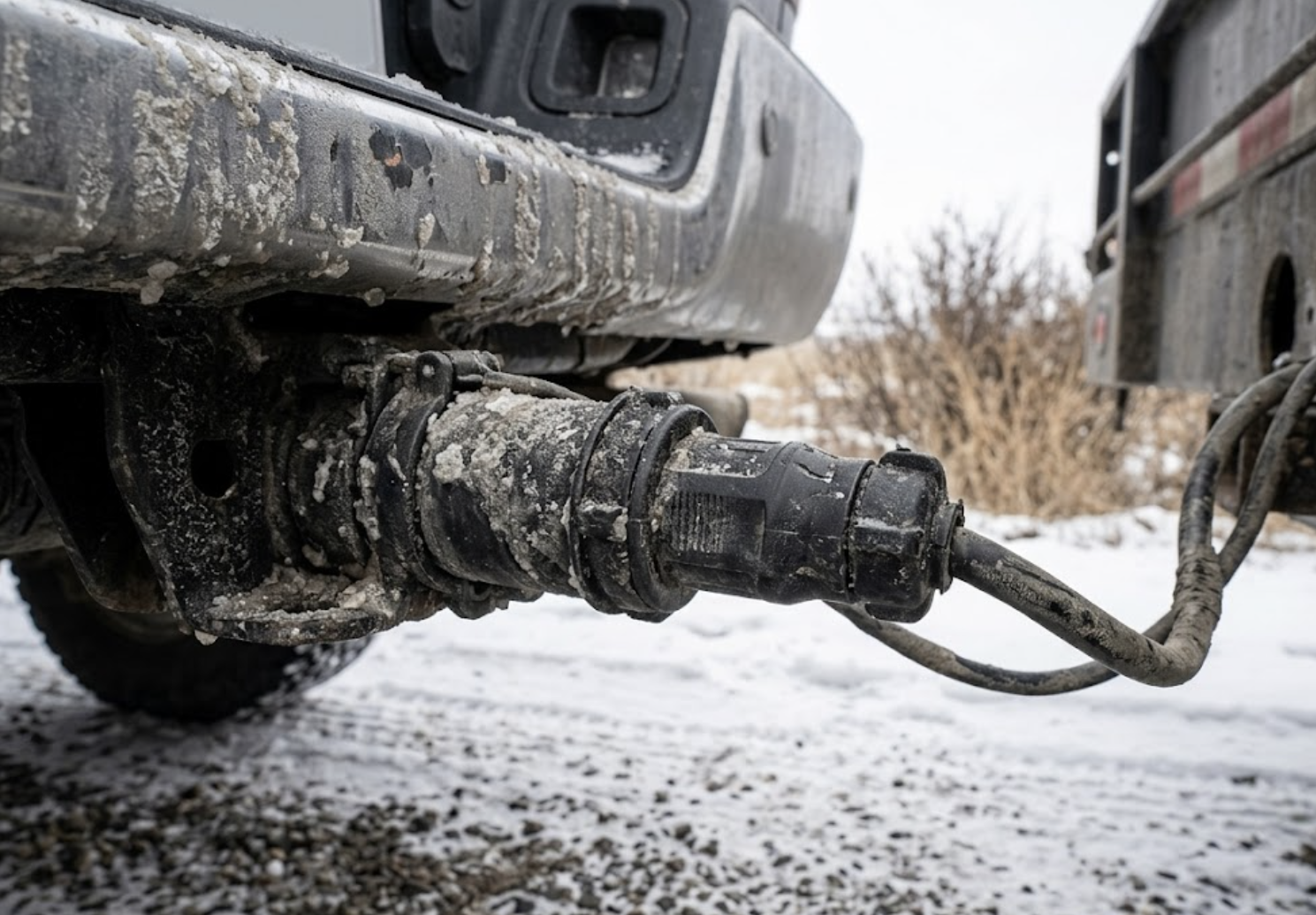
Environmental ingress is perhaps the most common cause of “creeping corrosion” in trailer wiring. When moisture enters the rear of a plug, it travels down the copper wire strands, rotting the harness from the inside out. Standard plugs often lack adequate rear-entry sealing, leaving the internal terminals vulnerable to pressurized water and road chemicals. Heavy-duty engineering focuses on total hermetic isolation through the use of multi-lip gaskets and high-tension spring-loaded covers.
These sealing systems create a pressurized barrier that blocks water, mud, and de-icing salts from reaching the electrical pins. The self-locking hinges on the socket covers ensure that the connection remains secure even during high-frequency chassis vibration. This attention to environmental shielding prevents the green corrosion that typically plagues lower-tier electrical components. By locking out the elements, professional-grade connectors maintain consistent signal clarity across all seven circuits, from the heavy-gauge ground wire to the auxiliary power lines.
Cross-Protocol Adaptability: Navigating US 4-Way to EU 7-Way Conversion Logic
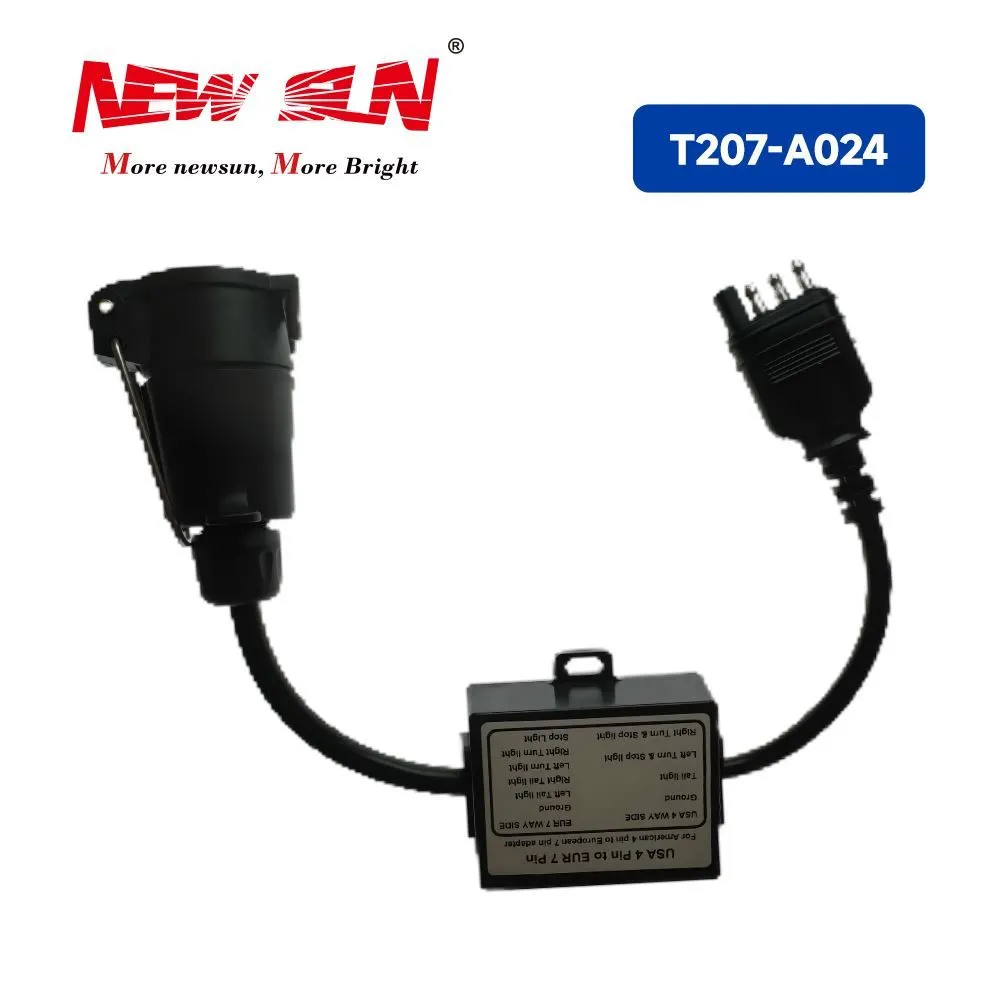
Global logistics often require vehicles to adapt to different regional electrical standards, especially when moving equipment between North American and European fleets. This creates a technical challenge, as the wiring logic and plug geometries differ significantly between these jurisdictions. Standard adapters often use flimsy internal jumpers that create parasitic electrical noise or excessive heat. A professional approach involves a dedicated US 4-way to EU 7-way trailer light connector converter designed with integrated circuitry.
These high-tier converters manage the signal split and merge logic with precision. They ensure that the brake and turn signals synchronize correctly without overloading the vehicle’s lighting control module. The NEWSUN engineering philosophy prioritizes heavy-duty molding for these converters, ensuring they possess the same ruggedness as the primary connectors. By using a professional-grade converter, operators avoid the risk of short circuits that often occur with DIY wiring modifications or low-quality generic adapters. This cross-border compatibility is essential for international logistics firms that demand seamless fleet integration.
Torsional and Tensile Resilience: Managing High-Frequency Vibration and Cable Strain
The physical connection between a truck and a trailer is never static; it experiences constant twisting, pulling, and high-frequency harmonics. Standard molded plugs frequently fail at the junction where the cable enters the plug body, as this point bears the brunt of the torsional stress. Heavy-duty connectors solve this issue through integrated mechanical strain relief systems. These systems anchor the cable firmly to the housing, preventing the internal wires from pulling out of their terminals during sharp turns.
Furthermore, professional manufacturers utilize internal terminal blocks with high-tension screw clamps or specialized crimp zones. These features neutralize the effect of high-frequency road vibration, which can cause standard friction-fit pins to lose contact. By securing the internal architecture, the factory ensures that the electrical link remains unbroken during the most turbulent transport routes. This structural resilience translates to fewer roadside repairs and a significant reduction in total cost of ownership for fleet managers.
Conclusion: Moving Beyond the “Commodity” Mindset to Asset Protection
The distinction between standard and heavy-duty 7-way connectors represents more than just a price difference; it is a fundamental shift in asset protection. By prioritizing high-purity metallurgy, advanced polymer science, and superior environmental sealing, TOKING HOLDING GROUP LIMITED sets the benchmark for industrial connectivity. These technical milestones ensure that commercial vehicles remain visible and compliant under the most grueling operational conditions. Choosing a specialized manufacturer allows distributors and fleet operators to mitigate the risks of electrical failure and expensive downtime. As global transport networks become more complex, the demand for reliable, high-tier connectivity solutions continues to grow. Investing in heavy-duty interfaces remains the most effective way to ensure long-term fleet resilience and safety on roads worldwide.
For more information regarding professional-grade trailer connectivity and technical specifications, please visit the official website: https://www.newsunlighting.com/.
Media Contact
TOKING HOLDING GROUP LIMITED
A202 ZHONGTIAN MCC,MAOJIAQIAO ROAD,HANGZHOU 310012 ZHEJIANG CHINA
This article was originally published by IssueWire. Read the original article here.
